Kako nastaje knjiga: od prve beleške do korica
Da li knjiga počinje onda kada napišemo prvu rečenicu ili mnogo ranije? O beleškama, istraživanju, junacima i onom trenutku kada dete podigne pogled i pita: „A da li se ovo zaista dogodilo?“
Does a book begin when we write the first sentence, or much earlier?
For me it usually begins long before the writing: sometimes with a single historical fact I cannot forget, sometimes with a place I have walked through, an object I caught sight of, an odd detail from the life of some great figure — and sometimes with a perfectly ordinary question from a child.
And I carry it inside me for a long time; I write it down, come back to it, cross things out, add things, sometimes even dream about it, and then wait for the moment when several seemingly unconnected details fall into place as a story.
“But what if…?” What if a child could meet Nikola Tesla? What if a historical figure stopped being a portrait in a textbook and became a person with dreams, fears, friends and unusual ideas? What if a medallion on a street in Clermont-Ferrand opened a door onto the 17th century?
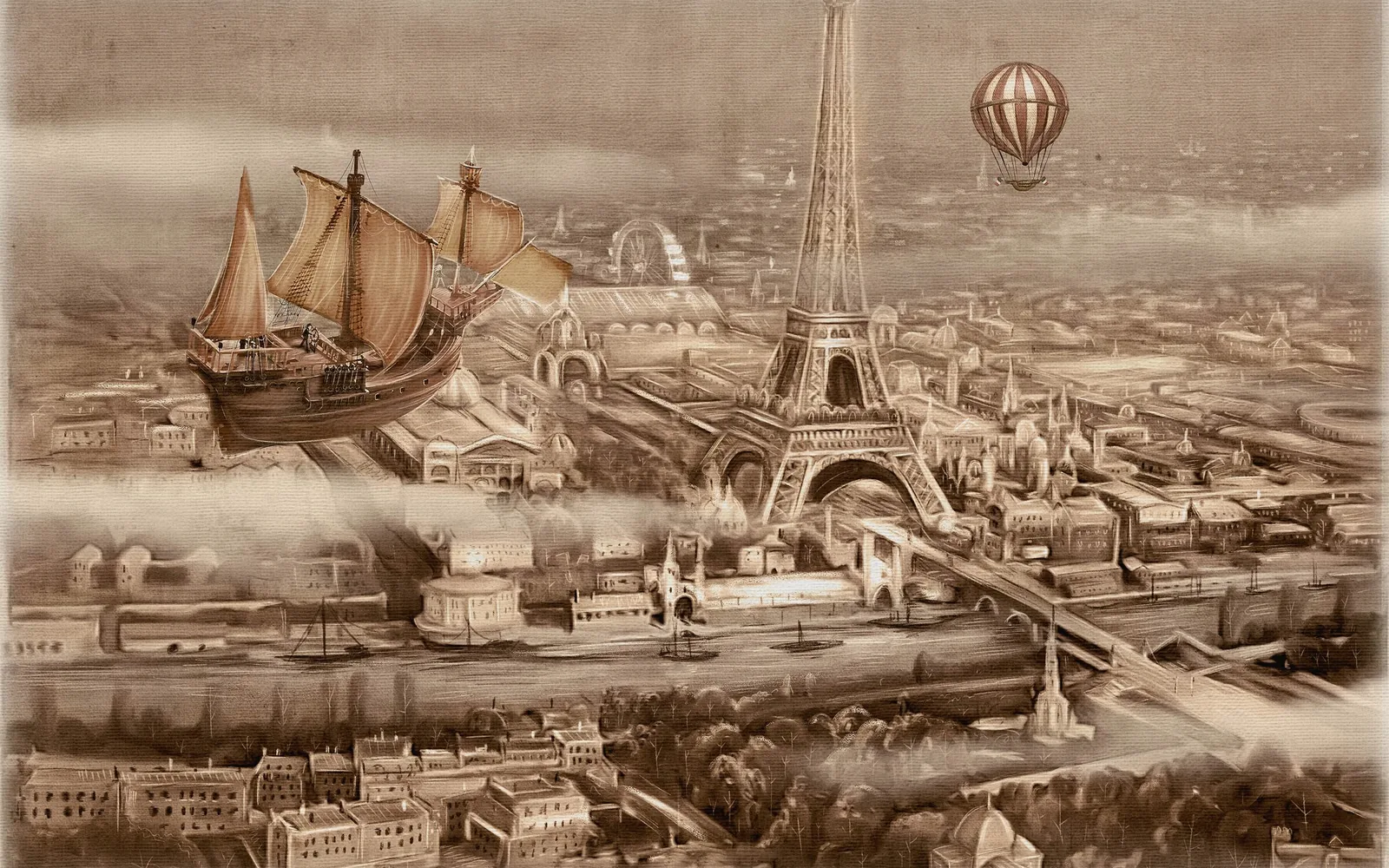
That is how, in The French Adventure, a real medallion bearing the likeness of Blaise Pascal became far more than a landmark on a city pavement. In the story it became the entrance to an adventure into the world of science, history, the Pascaline and a child’s curiosity.
In real life we walk past details like these every day. A writer simply pauses a little longer.
History is not decoration
When I write about historical figures, research is a large part of my work. Dates, places, inventions, letters, museums, architecture, old photographs, historical sources… But my aim is not to fit everything I find into the book — quite the opposite. What matters most is finding the one detail that will make a child want to know more.
In my books Nikola Tesla is first of all a curious boy who sees the world differently, and only then an inventor of the 19th and 20th centuries.
Blaise Pascal is a boy who worries about his family in the middle of their move from Clermont-Ferrand to Paris, and only later becomes a mathematician, physicist and philosopher.
And then the loveliest thing happens: the child finishes the story and starts exploring on their own, and literature becomes the beginning of learning rather than its end.
And then the characters arrive
Historical facts can be accurate down to the last date, but on their own they are still not a story. A story needs a heart.
That is why, in my books, we mostly look at history through the eyes of children.
They ask what a grown-up might not ask, and at that moment the historical figure steps down from the pedestal and comes close.
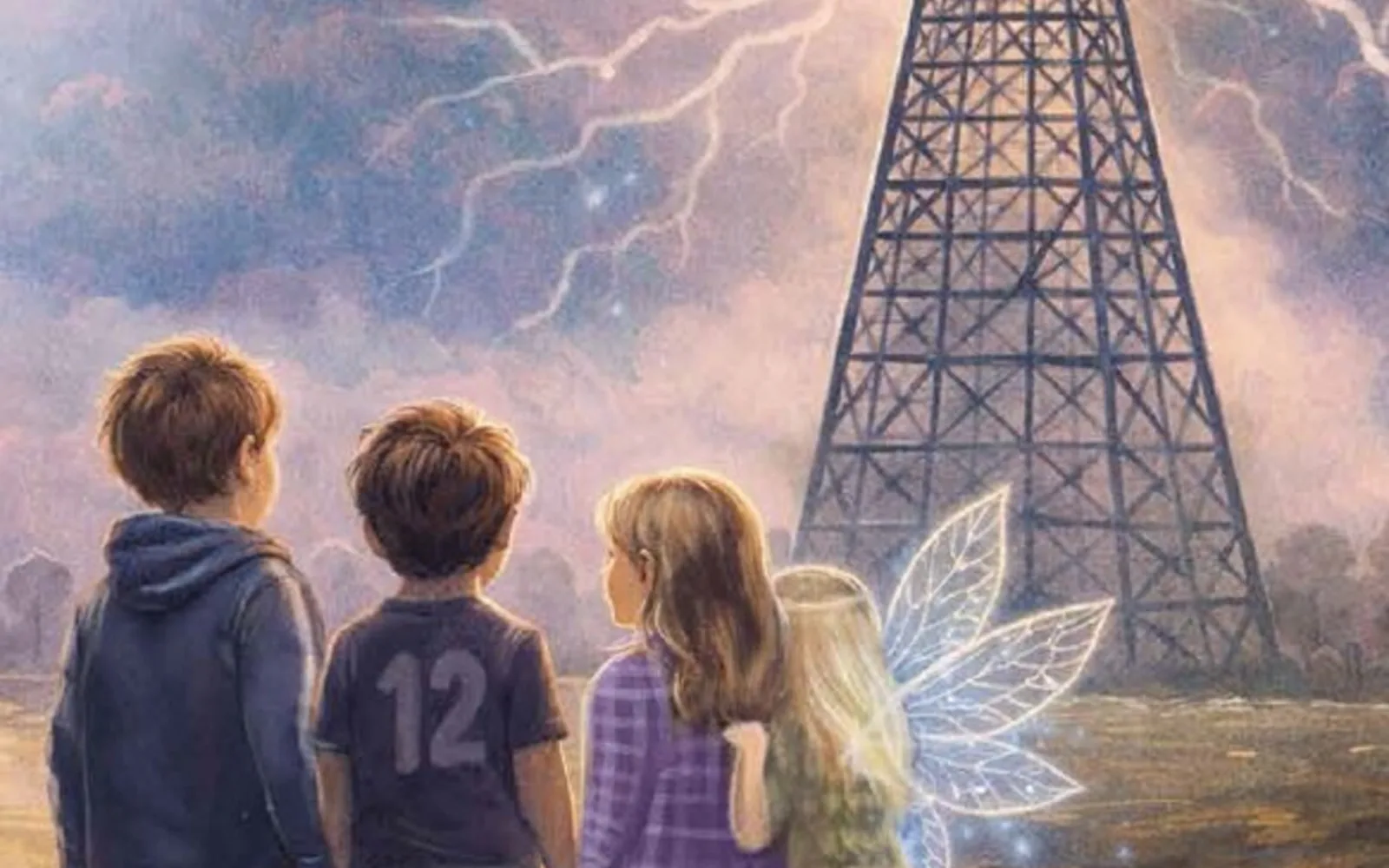
In The French Adventure, Luka is a boy of striking curiosity who is travelling with his parents and does not want to miss a chance to learn something new. That need to discover leads him into an unusual adventure with the guardian fairy Anđelina and Kuca.
And for me that childlike curiosity is one of the most important engines of a story.
The first version is never the last
When I finish a manuscript the book is not finished at all; a completely different job begins.
I read. I delete. I add. I go back several pages. I change one sentence, and because of it another three.
Sometimes I realise that something I loved very much is entirely unnecessary, and I cut it. That may be one of the hardest parts of writing: accepting that a good sentence is not necessarily good for that particular story.
Slowly the manuscript stops belonging to the writer alone: editorial reading, proofreading, illustrations, typesetting and covers all enter it.
Characters I had seen only inside my own head for so long are given a face for the first time. Looking at an illustration, I think: “Yes. That is him.”
The cover is not the end
And then, one day, the book arrives. A real one. Printed.
You take it in your hands and for a few moments you simply look at an object that for months, sometimes years, existed as a pile of notes, files, crossed-out sentences and pictures in your head.
You might think the work is done then.
For me it is not. The book actually ends its journey with the author precisely when a new one begins with the reader.
One child will laugh in a place I never expected; another will remember a historical detail I thought they would barely notice; a third will ask a parent a question nobody in the house can answer.
And perhaps they will look for the answer together. That is when I know the story has done what it was written for.
Why do I do all this?
I do not write historical stories to make the curriculum easier for children. Literature should not be a textbook in disguise. I write them because I believe that a child who comes to love a story may want to meet the person behind it: to open an encyclopaedia, visit a museum, look at a map, find a city, ask a new question, hug a parent.
And perhaps one day to make, write or discover something themselves.
So between the first note and the finished cover there is far more than the process of making a book.
There is the search for the right fact, the right character, the right sentence — and above all for that spark which will make a child look up after the last page and ask: “But did this really happen?”
If that question appears, then for me the story is not over.
It has only just begun.
Maja C. S.
Maya Story — the voice of childhood | Family literature